Portraits of Exile
Copenhagen, Denmark ,1995
Project Background
Portraits of Exile was a site-specific installation in Copenhagen commemorating the fifty year anniversary since the end of World War II.
Denmark, and Copenhagen, have a unique history, being the only country occupied by the Nazis to save it’s entire Jewish community. The rescue of 1943, when thousands of Jews were secretly sheparded on fishing boats to Sweden, is an important part of Danish identity and is a contrast to today’s hesitant and ambivalent refugee politics.
Today, Copenhagen plays a central role as a gathering point and way station for refugees from the Balkans and the former Soviet Union. Denmark’s liberal social welfare state has made Copenhagen an attractive destination for many of these refugees. The reality, however, is different - with political refugees waiting for years, being stowed away in a crowded “hotel” ship, while asylum applications are being processed and delayed.
The Project
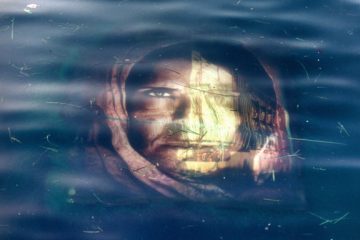
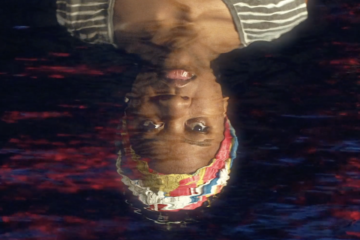
Given this coming together of issues related to water, history, and rescue, Portraits of Exile focused on these past and present events by submerging 9 large (1.6 X 1.8 meter) light boxes with “dura-trans” (transparency) images under water in the canal surrounding the Danish Parliament building. The transparency images showed portraits of Danish Jews rescued to Sweden during the war, as well as portraits of present day refugees from the former Yugoslavia, Pakistan, Cyprus, and Afghanistan. These portraits were superimposed on images spanning time and themes: maps of escape routes, entry visas stamped into passports, the yellow “Jew” star devised by the Nazis, and fishing boats and ships involved in rescues then and now. Portraits of Exile framed the history of the second world war and the refugees it created in light of the troubling events sweeping Europe today.